English
  French
  German
  Spanish
  Portuguese
  Dutch
Dutch  Italian
  Russian
  Chinese
  Japanese
  Korean
  Indonesian
  Thai
Thai  Vietnamese
  Arabic
  Turkish
  Hebrew
  Hindi
Hindi 
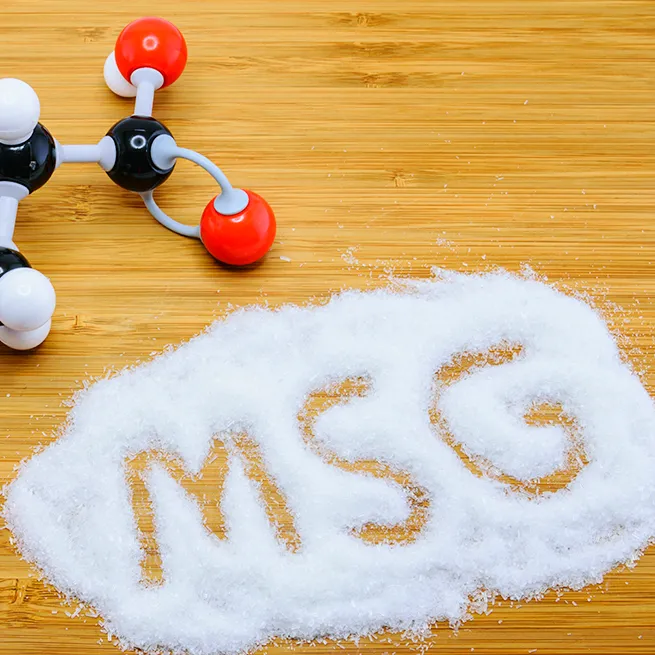
For decades, Monosodium Glutamate (MSG) has been surrounded by widespread rumors and misunderstandings. Many consumers and even food distributors still ask: Is Monosodium Glutamate bad for your health?
The clear and scientific answer is NO.
Under normal dietary usage, food-grade MSG (E621) is completely safe for human consumption. All major global food safety authorities have repeatedly verified that MSG is a reliable, non-toxic flavor enhancer suitable for daily cooking and large-scale food production.
Where Does the “MSG Unhealthy” Rumor Come From?
The negative reputation of MSG originated from an informal medical observation in the 1960s, known as the “Chinese Restaurant Syndrome”. At that time, an individual claimed to feel dizziness and numbness after eating restaurant food containing MSG.
However, no subsequent large-scale clinical trials or scientific studies have proven any direct link between normal MSG intake and physical discomfort. Most reported symptoms are caused by overeating, high sodium intake, fatigue, or psychological suggestion, rather than MSG itself.
Global Food Authorities Confirm MSG Safety
All authoritative international food organizations have officially approved MSG as a safe food additive:
-
FDA (USA): Classifies MSG as GRAS (Generally Recognized As Safe), with no restriction on regular food use.
-
JECFA (FAO/WHO): Grants MSG a “not specified” acceptable daily intake, meaning it has no health risks under normal consumption.
-
EFSA (European Food Safety Authority): Confirms glutamate-based additives are safe for general public use with reasonable dosage control.
Natural glutamate can be found in tomatoes, seaweed, mushrooms, cheese, meat and dairy products. The MSG we supply is produced through grain fermentation technology, not chemical synthesis. Its molecular structure is identical to natural glutamate, making it easy for the human body to metabolize and absorb.
On the contrary, MSG has a unique advantage: it enhances umami taste, allowing food manufacturers and families to reduce salt usage by 20%-30% while maintaining rich flavor, effectively lowering sodium intake and benefiting cardiovascular health.
Monosodium Glutamate (MSG) is not bad for you.
Button: Request Free Quotation